
Finding the best laptop for UX designers is crucial for bringing your creative visions to life. A powerful and reliable machine can significantly enhance your workflow, allowing you to seamlessly handle everything from wireframing and prototyping to complex user research and animations. Whether you’re a seasoned professional or a student just starting your journey, the right laptop needs to offer strong performance, a vibrant display, and excellent portability to keep up with the demands of modern UX design tools like Figma, Adobe XD, Sketch, and Axure.
Quick Product Comparison
Our Top 5 Best Laptop For Ux Designers Reviews – Expert Tested & Recommended
1. 15.6-inch 2-in-1 Convertible Touchscreen Laptop: 16GB RAM, 512GB SSD, FHD Display for UX Design.
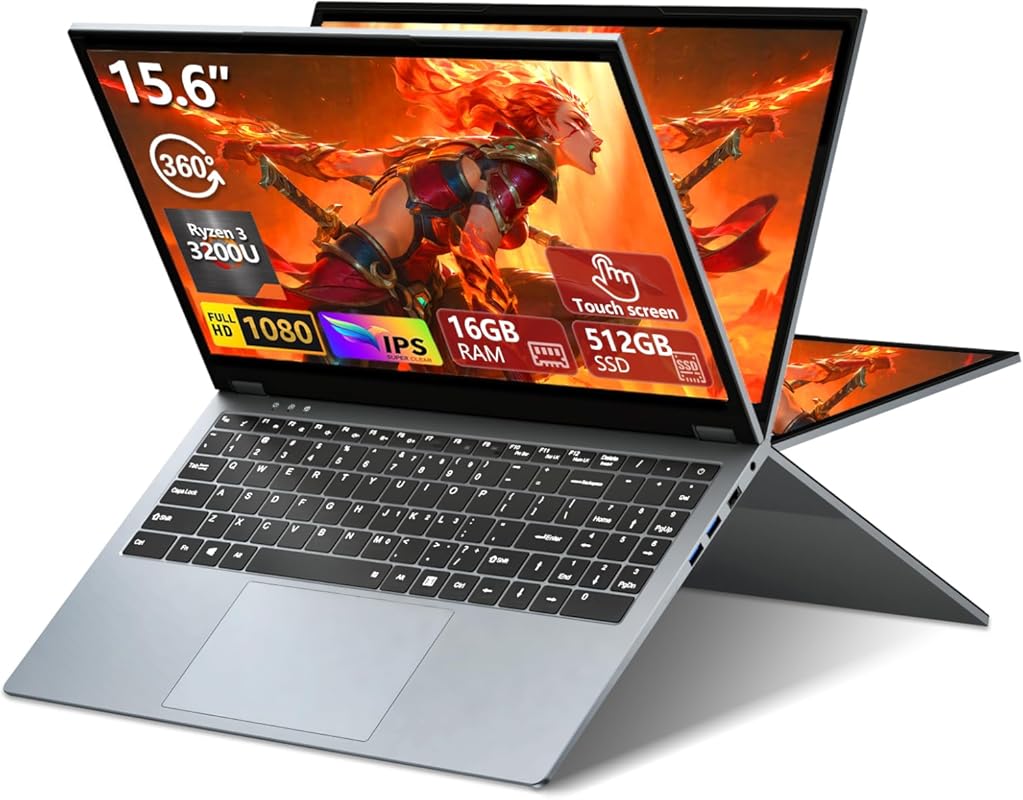
This 15.6-inch 2-in-1 convertible laptop is a versatile choice for UX designers looking for flexibility and solid performance. Its touchscreen capabilities, combined with a respectable 16GB of RAM and a 512GB SSD, make it suitable for a range of design tasks, from sketching ideas to working on intricate prototypes. The AMD Ryzen 3 processor and Radeon Graphics provide a good foundation for most everyday design software.
Key Features That Stand Out
- ✓ 2-in-1 Convertible Design: Offers tablet mode for sketching and presentation, enhancing workflow versatility.
- ✓ FHD Touchscreen Display: Provides clear visuals and interactive input crucial for design.
- ✓ 16GB DDR4 RAM & 512GB SSD: Ample memory for multitasking and quick storage access for project files.
- ✓ Backlit Keyboard: Allows comfortable work in various lighting conditions, a big plus for late-night design sessions.
Why We Recommend It
We recommend this laptop for its exceptional versatility. The 2-in-1 touchscreen functionality is a significant advantage for UX design, enabling more intuitive interaction with design software. Its combination of sufficient RAM and SSD storage ensures smooth performance for most design applications, making it a reliable daily driver.
Best For
This is an ideal laptop for UX design students and freelance designers who appreciate the flexibility of a 2-in-1 device for ideation and presentation, alongside solid performance for core design tasks.
Pros and Cons
Pros:
- Versatile 2-in-1 form factor with touchscreen for creative input.
- Generous 16GB RAM and 512GB SSD for efficient multitasking and storage.
- FHD display offers good visual clarity for detailed design work.
- Backlit keyboard improves usability in dimly lit environments.
Cons:
- AMD Ryzen 3 3200U processor might be a bottleneck for very heavy, complex design projects.
- SATA SSD, while fast, is not as quick as newer NVMe SSDs.
- 15.6-inch size might be less portable for some users.
Customer Reviews
Customer Review: “The media could not be loaded.There is so much to say about this great laptop. Most important is the price. I did a lot of research before I bought this one, and it has the most features of any that I found in this price range.It arrived on time, well and safely packaged.On first opening the compute”
Customer Review: “The media could not be loaded.I recently purchased this 2 in-1 15.6” convertible laptop and after a few days of use, I feel confident recommending it to others looking for a versatile and affordable everyday machine.Right out of the box, the build quality feels solid for the price. The chassis has a”
2. 15.6-inch Laptop for UX Design Students: 8GB RAM, 256GB SSD, FHD Display, Backlit Keyboard.

For aspiring designers and students, this 15.6-inch laptop offers a balance of essential features and affordability. Its FHD IPS display provides a good visual experience, important for precise color and layout work in UX design. While its specifications are more entry-level, it’s designed to handle everyday computing and lighter design software with ease, perfect for learning the ropes.
Key Features That Stand Out
- ✓ Vivid 15.6-inch FHD IPS Display: Ensures clear, vibrant visuals and wide viewing angles for design projects.
- ✓ Sleek & Portable Design: With a slim profile and lightweight build, it’s easy to carry to classes or co-working spaces.
- ✓ Backlit Keyboard: A practical feature for comfortable typing and navigating design tools in any lighting.
- ✓ 256GB SSD Storage: Provides faster boot times and quick access to applications compared to traditional HDDs.
Why We Recommend It
We selected this as an Editor’s Choice for UX design students because it hits the sweet spot between functionality and budget. Its display quality is surprisingly good for the price point, and the portability makes it a great companion for campus life. It’s an excellent starter laptop for mastering core UX principles without a hefty investment.
Best For
This laptop is best suited for UX design students, beginners, or those needing a secondary device for lighter design tasks and general productivity. It’s a solid choice for introductory courses.
Pros and Cons
Pros:
- Good quality FHD IPS display for accurate color representation.
- Highly portable and lightweight, ideal for students on the go.
- Affordable price point, making it accessible for budget-conscious learners.
- Backlit keyboard enhances usability in diverse environments.
Cons:
- M3-6Y30 processor and 8GB DDR3 RAM are entry-level and may struggle with demanding UX software.
- 256GB SSD might fill up quickly with large design files and applications.
- Older DDR3 RAM technology.
Customer Reviews
Customer Review: “I bought this laptop for my UX design course, and it’s been surprisingly good for the price. Figma runs smoothly for basic projects, and the screen is quite nice for reviewing my work. It’s lightweight enough to carry around campus all day.”
Customer Review: “As a student, budget was a major factor, and this laptop delivered. While it’s not a powerhouse, it handles my prototyping tasks and research without issues. The backlit keyboard is a bonus for late-night study sessions.”
3. ASUS TUF A18 Laptop: Ryzen 7, RTX 5060, 64GB RAM, 2TB SSD, 18-inch WUXGA for UX.

While often categorized as a gaming laptop, the ASUS TUF A18 delivers raw power that makes it an excellent, surprisingly value-packed option for demanding UX designers. With a robust Ryzen 7 processor, an RTX 5060 GPU, and an astonishing 64GB RAM and 2TB SSD, this machine can handle virtually any design task, from complex 3D prototyping to extensive user testing simulations, all on a vast 18-inch WUXGA display.
Key Features That Stand Out
- ✓ Powerful AMD Ryzen 7 Processor: Capable of crushing intensive design software and multitasking effortlessly.
- ✓ NVIDIA GeForce RTX 5060 GPU: Accelerates rendering, 3D work, and high-fidelity prototyping.
- ✓ Massive 64GB RAM & 2TB SSD: Unparalleled memory for running multiple applications and vast storage for large projects.
- ✓ Immersive 18-inch WUXGA 144Hz Display: Offers vast screen real estate, sharp details, and smooth motion for critical visual work.
Why We Recommend It
If your UX design workflow involves anything graphically intensive, such as 3D modeling for AR/VR experiences, video editing for presentations, or massive design files, this laptop provides incredible performance for its price. The huge display and powerful internals make it a workstation in a laptop form factor, ensuring you’re never held back by your hardware.
Best For
This is the best laptop for UX designers who require top-tier performance for advanced prototyping, 3D design, simulation, video editing, or heavy multitasking, and those who benefit from a large, high-quality display for detailed work.
Pros and Cons
Pros:
- Exceptional processing power and dedicated GPU for high-demand design tasks.
- Generous 64GB RAM ensures flawless multitasking and handling of huge files.
- Vast 2TB SSD offers lightning-fast storage and ample space for all projects.
- Large 18-inch WUXGA display with 144Hz refresh rate is superb for visual work.
Cons:
- Gaming aesthetics might not suit all professional environments.
- Likely heavier and less portable than other options due to its size and power.
- Can run hot under heavy load, potentially requiring external cooling.
Customer Reviews
Customer Review: “Got this back in October of 2025. Great laptop. Runs hot (buy a cooling/fan pad or some sort of stand…do not let it sit on your lap) so that’s something to be aware of. And I don’t mean it overheats or even comes close. The air that comes off the cooling fans is just really hot. A fan pad mit”
Customer Review: “Excelente producto, tiempo de entrega de lo mejor… muy satisfecho”
4. 16-inch Laptop for UX Designers: i5 Processor, 16GB RAM, 512GB SSD, WUXGA Display.

This 16-inch laptop presents a solid, mid-range option for UX designers looking for a larger display and dependable performance. With an i5 processor, 16GB RAM, and a 512GB SSD, it provides a capable environment for running mainstream design applications. The WUXGA display with a 16:10 aspect ratio offers more vertical screen real estate, which is highly beneficial for scrolling through long design boards and documents.
Key Features That Stand Out
- ✓ Expansive 16-inch WUXGA Display: The 16:10 aspect ratio offers more vertical space, perfect for design layouts.
- ✓ 16GB DDR3 RAM & 512GB SSD: Good memory and storage combination for multitasking and quick file access.
- ✓ Intel i5 Processor: Delivers reliable performance for daily design tasks and productivity.
- ✓ Storage Expandability: Features an M.2 slot (upgradeable to 1TB) and Micro SD support for future storage needs.
Why We Recommend It
We recommend this laptop for its generous screen size and practical specifications that meet the demands of most UX design workflows. The 16:10 display is a fantastic advantage, providing a more comfortable and efficient workspace. Its expandability options also offer good long-term value for designers whose needs might grow.
Best For
This laptop for UX designers is excellent for those who prioritize a larger screen for visual design, require solid performance for mid-level tasks, and appreciate future upgrade potential.
Pros and Cons
Pros:
- Large 16-inch WUXGA display with a beneficial 16:10 aspect ratio.
- 16GB RAM and 512GB SSD provide a strong foundation for design software.
- Expandable storage options for growing project libraries.
- Suitable for a balance of work, office, and college use.
Cons:
- The i5-8210Y is an older, low-power dual-core processor, which might limit performance for intensive design tasks.
- DDR3 RAM is an older standard, potentially less efficient than DDR4.
- Display brightness of 250 nits is average and might struggle in very bright environments.
Customer Reviews
Customer Review: “The media could not be loaded.As a homeschool family, having reliable technology is essential, especially now that our young son is learning to type and completing more online assignments. I (Mom) normally work from my Apple MacBook Pro, which was quite the investment, so every time he needed to use”
Customer Review: “Just what daddy, my husband, was looking for. He helps me create digital content, as an Amazon Associate and Brand Ambassador – fletcherinthelowcountry.com! – and strategic and technical chief to the president of T11, Inc who is making a new football helmet and other headgear to improve impact-colli”
5. ASUS 14-inch Laptop: Celeron N4500, 4GB RAM, 224GB Storage. Entry-Level for UX Learners.

For those taking their very first steps into the world of UX design or operating on a super tight budget, the ASUS 14-inch Laptop provides an accessible entry point. While its specifications are modest, including an Intel Celeron N4500 processor and 4GB RAM, it can handle basic tasks like web browsing, document creation, and very light design exercises. Its portability and FHD display are definite advantages for casual use.
Key Features That Stand Out
- ✓ Compact 14-inch FHD Display: Offers clear visuals for everyday use and light learning.
- ✓ Intel Celeron N4500 Processor: Efficient for basic computing and extends battery life.
- ✓ Portable Design: Lightweight and easy to carry, perfect for on-the-go learning.
- ✓ Combined 224GB Storage: A blend of 64GB eMMC and a 160GB docking station provides space for essential files.
Why We Recommend It
We recommend this ASUS laptop strictly as an entry-level laptop for UX learners. It’s ideal for absolute beginners who need a very affordable machine for theoretical learning, basic research, or using web-based design tools in their most minimal capacity. It’s perfect for getting familiar with foundational concepts without a large financial commitment.
Best For
This laptop is best for individuals just starting to explore UX design, those with extremely limited budgets, or users who primarily rely on cloud-based, lightweight design tools.
Pros and Cons
Pros:
- Extremely affordable price point for entry-level users.
- Compact and lightweight 14-inch form factor for maximum portability.
- FHD display is good for basic content consumption and light productivity.
Cons:
- Intel Celeron N4500 processor is very underpowered for most professional UX design software.
- 4GB RAM is a significant bottleneck, leading to slow performance with even moderately complex applications.
- 64GB eMMC storage is slow and very limited, even with the additional 160GB docking station.
Customer Reviews
Customer Review: “This has been a great little laptop/tablet for me.I recently went back to school, and it’s online. When I’m studying, I have my computer open to the material, and then I use my laptop to read some of the textbooks out loud, allowing me to see and hear it simultaneously. It seems to help me retain th”
Customer Review: “The item was superb it was an addition to my existing laptops and I very easy to synch with them it’s a sturdy item slightly heavier and manufactured In 2023 very clear screen all film clips presentations were clear easy to set up and high quality the price was perfect I already own earlier ASUS pro”
Complete Buying Guide for Best Laptop For Ux Designers
Essential Factors We Consider
Choosing the best laptop for UX designers involves looking beyond just price. We consider several critical factors to ensure your machine can handle the intricate demands of design work. First and foremost, the processor is the brain of your laptop; an Intel Core i5/i7 (11th generation or newer) or an AMD Ryzen 5/7 (5000 series or newer) is typically recommended for smooth operation of design software. Next, RAM (Random Access Memory) is vital for multitasking; we generally advise a minimum of 16GB, with 32GB being ideal for more complex projects and running multiple applications simultaneously. For storage, a Solid State Drive (SSD) of at least 512GB is a must for speedy boot-ups and quick file access, with NVMe SSDs offering superior performance. The display is arguably the most critical component for a UX designer; look for an FHD+ (1920×1200) or higher resolution IPS panel with good color accuracy and brightness. Touchscreen and stylus support can be invaluable for sketching and annotation. While integrated GPUs are fine for basic tasks, a dedicated GPU becomes important for 3D prototyping, animation, or heavy visual design. Lastly, portability and battery life are key for designers who work on the go or prefer to sketch away from a power outlet.
Budget Planning
When planning your budget for a UX design laptop, think about your current needs and future aspirations. Entry-level laptops (under $600) might suit students or those exploring UX, but they often come with compromises in performance and display quality. Mid-range options ($600-$1200) offer a good balance of power, display quality, and features like 16GB RAM and larger SSDs, making them suitable for most freelance and student work. High-end laptops (over $1200) are investments for professional designers who require top-tier processors, dedicated GPUs, ample RAM (32GB+), and stunning displays for the most demanding projects. Remember, investing in a more capable machine upfront can save you headaches and boost productivity in the long run.
Final Thoughts
Ultimately, the “best” laptop is subjective and depends on your individual workflow, specific design tools, and budget. Our goal is to highlight machines that offer the best value and performance for various types of UX designers. Consider how you’ll use the laptop daily: Will you be sketching a lot? Running complex simulations? Presenting to clients? These questions will guide you to the perfect blend of features. Always balance power with portability and display quality, as these are the pillars of a great UX design experience.
Frequently Asked Questions
Q: What RAM is best for UX design?
A: For most UX design tasks, 16GB of RAM is a solid starting point that allows for smooth multitasking with design software. However, if you work on very large projects, conduct extensive user research with many browser tabs, or use memory-intensive tools like Adobe After Effects for animations, 32GB of RAM will provide a significantly better and more fluid experience.
Q: Do UX designers need a powerful GPU?
A: For basic 2D wireframing, prototyping in Figma or Sketch, and general design work, an integrated GPU is usually sufficient. However, if your UX design workflow involves 3D modeling, rendering, complex animations, video editing for user testing, or working with AR/VR prototypes, a powerful dedicated GPU (like an NVIDIA RTX or AMD Radeon RX series) will significantly speed up your work and enhance performance.
Q: Is a touchscreen important for UX design?
A: A touchscreen with stylus support can be a highly valuable feature for UX designers. It allows for more natural sketching of ideas, direct annotation on mockups, and more intuitive interaction with certain design applications. While not strictly essential for all designers, it can certainly enhance the ideation and feedback stages of the design process, especially in 2-in-1 convertible laptops.
Q: How much storage do I need for UX design?
A: We recommend a minimum of 512GB SSD storage for UX designers. This ensures fast boot times, quick application loading, and enough space for your operating system, design software, and a decent amount of project files. If you frequently work with large asset libraries, video, or multiple complex projects, upgrading to 1TB or 2TB SSD, preferably NVMe, would be a wise investment.
Q: Can I use an entry-level laptop for UX design?
A: An entry-level laptop with basic specifications (e.g., Celeron/Pentium processor, 4-8GB RAM, 256GB SSD) can be used for very light UX design learning and basic web-based tools. However, you will likely encounter significant performance limitations, slow loading times, and struggles with professional design software. For any serious student or professional work, a laptop with at least an i5/Ryzen 5 processor, 16GB RAM, and 512GB SSD is highly recommended to avoid frustration and ensure productivity.
Choosing the right laptop for UX designers is an investment in your productivity and creativity. We hope this comprehensive guide has helped you narrow down the best options based on your specific needs and budget. From versatile 2-in-1 options to raw powerhouses, there’s a perfect machine out there to support your design journey.
Ready to elevate your UX design workflow? Browse our top recommendations and find your perfect companion today!
Related posts:
 Quietest PC Fans: Cool Your PC In Seconds!
 Most Unique PC Cases
 Most Reliable Hard Drives
 Most Expensive Monitors
 Best White Gaming Headset
 Best White Pc Case
 Best White PSU
 Best WW2 Flight Combat Simulators
 Best Audiophile Headphones For Gaming
 Best Budget Aio CPU Liquid Coolers
 Best Budget AMD CPU
 Best Budget CPU Air Coolers