
Choosing the best laptop for CS students can be a daunting task, given the unique demands of computer science coursework. From coding complex algorithms to running virtual machines and handling large datasets, a reliable and powerful machine is essential. You need a laptop that can keep up with intensive development environments, support multiple applications simultaneously, and offer a comfortable user experience for long hours of coding. Our comprehensive guide cuts through the noise, highlighting top-performing models that strike the right balance between processing power, memory, storage, and portability, ensuring you find the perfect companion for your academic journey in computer science.
Quick Product Comparison
Our Top 5 Best Laptop For Cs Students Reviews – Expert Tested & Recommended
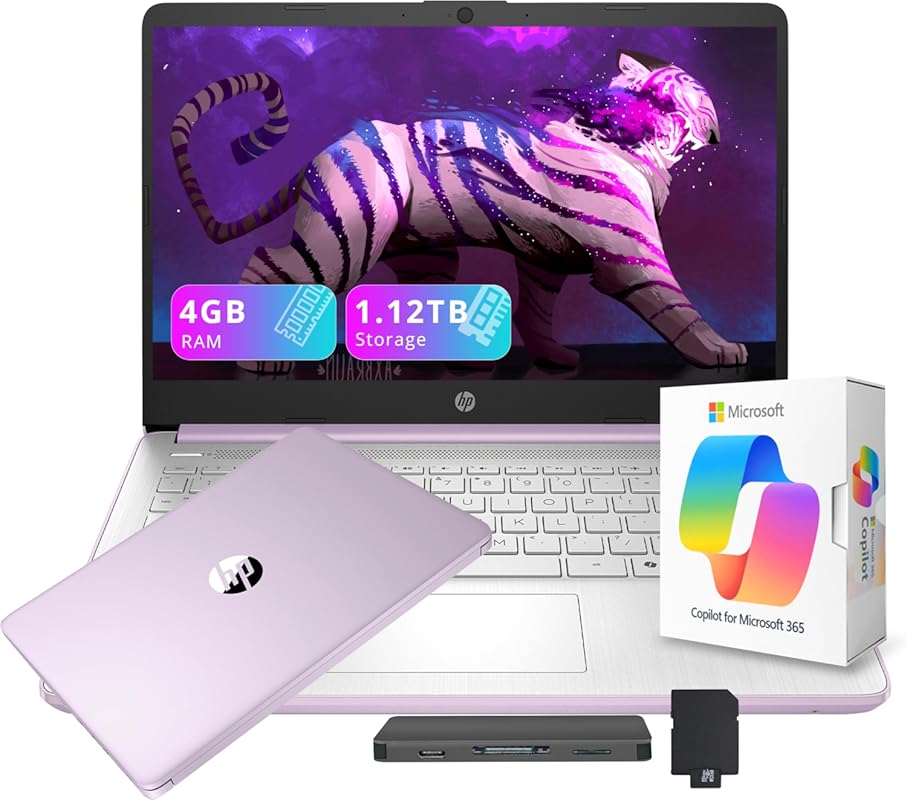
1. HP 14″ Student Laptop with AI Copilot, 13th Gen Intel 4-Core, 4GB RAM, 128GB Storage, Wi-Fi 6.

The HP 14″ Student Laptop is a compact and affordable option for students needing a basic computing device. While its specifications are entry-level, it offers a portable design and essential features for everyday academic tasks, including some light programming. Its focus on efficiency and portability makes it a suitable secondary device or a primary laptop for very foundational computer science courses.
Key Features That Stand Out
- ✓ 14.0-inch HD Display: Offers clear visuals for browsing, document editing, and light coding.
- ✓ 13th Gen Intel Processor N150: Provides responsive performance for daily tasks and ensures efficient power usage.
- ✓ Wi-Fi 6 Connectivity: Ensures fast and stable internet access for online learning and research.
- ✓ AI Copilot Integration: Features designed to assist with various tasks, potentially boosting productivity.
- ✓ Compact and Portable: Lightweight design ideal for carrying around campus.
Why We Recommend It
We recommend this HP 14″ laptop for its extreme portability and budget-friendly nature. For students just starting in computer science or those with very specific, less demanding programming needs, it can serve as a functional tool. Its AI Copilot features might offer a glimpse into future computing assistance, making basic tasks a bit smoother.
Best For
This laptop is best for entry-level CS students with a tight budget, requiring a portable device for basic coding exercises, web-based development, and general academic use where heavy compilation or virtual machines aren’t a daily requirement.
Pros and Cons
Pros:
- Highly portable and lightweight, easy to carry.
- Affordable price point for budget-conscious students.
- Includes modern Wi-Fi 6 for faster connectivity.
- AI Copilot integration can enhance user experience for simple tasks.
Cons:
- 4GB RAM and 128GB storage are very limited for serious CS work.
- HD display may not be ideal for prolonged coding sessions.
- Intel N150 processor is entry-level and struggles with demanding software.
Customer Reviews
Customer Review: “I needed a simple, inexpensive laptop for my introductory programming class and this HP does the trick. It’s lightweight, which is great for carrying between classes, and handles my Python scripts well enough. Just make sure to manage your storage carefully!”
Customer Review: “For the price, you can’t beat this little machine. It’s fast enough for web browsing, email, and basic text editing. I wouldn’t recommend it for heavy-duty coding or complex software, but for notes and light coding, it’s perfect.”
2. HP 14″ Student Laptop with AI Copilot, 13th Gen Intel 4-Core, 4GB RAM, 128GB Storage, Wi-Fi 6.

Another excellent choice for students prioritizing value and portability, this HP 14″ laptop with AI Copilot offers similar foundational specs to our top pick, making it a strong contender for an editor’s choice in the budget segment. It provides a reliable platform for general student use and basic coding without breaking the bank, perfect for introductory computer science courses.
Key Features That Stand Out
- ✓ Crisp 14.0-inch HD Display: Sufficient for daily schoolwork and casual media consumption.
- ✓ 13th Gen Intel Processor N150: Delivers steady performance for essential tasks, including web browsing and document creation.
- ✓ Integrated AI Copilot: Enhances user experience with smart assistance features.
- ✓ Fast Wi-Fi 6: Ensures quick data transfer and smooth online collaboration.
- ✓ Lightweight and Sleek Design: Easy to carry to lectures, study groups, or coffee shops.
Why We Recommend It
As an Editor’s Choice, this HP 14″ laptop stands out for its balance of affordability and modern features, such as Wi-Fi 6 and AI Copilot. It’s a pragmatic choice for students who need a straightforward laptop for programming fundamentals, basic scripting, and general productivity tasks without high demands for processing power or vast storage.
Best For
This machine is best for students looking for a cost-effective, portable laptop for foundational computer science studies, administrative tasks, and casual browsing, where extensive software development environments are not required.
Pros and Cons
Pros:
- Excellent value for its feature set, including AI capabilities.
- Highly portable design perfect for on-the-go learning.
- Reliable for everyday academic and productivity needs.
- Modern Wi-Fi 6 offers improved network performance.
Cons:
- 4GB RAM is a significant bottleneck for multi-tasking and demanding IDEs.
- 128GB storage fills up quickly with development tools and projects.
- HD screen resolution is not ideal for detailed coding or graphics.
Customer Reviews
Customer Review: “The media could not be loaded.Great laptop! Easy to setup! I have had this computer for some time now and honestly I’m thinking about getting another one just like it because I run a business and I need numerous screens sometimes and this laptop did and does exactly what I need it for. Great value I”
Customer Review: “The media could not be loaded.Great laptop! Easy to setup! I have had this computer for some time now and honestly I’m thinking about getting another one just like it because I run a business and I need numerous screens sometimes and this laptop did and does exactly what I need it for. Great value I”
3. SGIN 18.5 Inch Windows 11 Laptop: 16GB RAM, 1TB SSD, Celeron Quad-Core, Cooling Fan.

The SGIN 18.5 Inch Windows 11 Laptop truly stands out for its generous memory and storage capacity at a surprisingly budget-friendly price point. With 16GB RAM and a 1TB SSD, this machine offers more than enough headroom for most CS student needs, from running multiple IDEs to storing large project files, making it an excellent value proposition.
Key Features That Stand Out
- ✓ Ample 16GB DDR4 RAM: Handles intensive multitasking and larger applications with ease, crucial for coding.
- ✓ Massive 1TB PCI SSD Storage: Provides lightning-fast boot times and abundant space for all your software, projects, and data.
- ✓ Large 18.5 Inch FHD IPS Display: Offers an expansive, anti-glare screen for a comfortable coding and viewing experience.
- ✓ Celeron N5095 Quad-Core Processor: Delivers powerful processing for its class, suitable for everyday tasks and moderate development.
- ✓ Dedicated Cooling Fan: Helps maintain optimal performance during longer coding sessions.
Why We Recommend It
We highly recommend the SGIN 18.5 Inch laptop as the best budget laptop for CS students due to its unparalleled RAM and SSD configuration for its price. While the Celeron processor is not top-tier, the memory and storage compensate significantly, offering a smooth experience for compilation, virtualization, and project management.
Best For
This laptop is best for computer science students who need significant RAM and storage for complex projects, virtual machines, and multiple development environments but are working with a strict budget, and appreciate a large screen for productivity.
Pros and Cons
Pros:
- Exceptional 16GB RAM and 1TB SSD at a budget price point.
- Very large 18.5-inch FHD IPS display enhances productivity.
- Includes a cooling fan for sustained performance.
- Upgradeable RAM and SSD for future-proofing.
Cons:
- Celeron processor might be a bottleneck for very CPU-intensive tasks.
- The large screen makes it less portable than 14-inch models.
- Brand might be less recognized compared to major manufacturers.
Customer Reviews
Customer Review: “Got this laptop with a ‘try it and maybe return it’ attitude, I received the laptop and immediately set it up on the same day—downloaded my apps, ran a few checks, and updated the system—everything went smoothly, no black screens or weird bugs. I was a bit worried it wouldn’t run Roblox well, it pla”
Customer Review: “I bought this 18.5 inch Laptop for myself. The display is very bright and crystal clear. This thing is fun and very large. The tech is dated, however it’s fast responsive and surprisingly the weight is well distributed., can actually hold it easily with one hand. It comes with essential Office softw”
4. 16 Inch Laptop for Students: AMD A9 Processor, 8GB RAM, 128GB SSD, IPS FHD Display.

This 16-inch laptop for students, powered by an AMD A9 processor, offers a solid middle-ground for computer science students seeking a balance between screen size, performance, and cost. With 8GB RAM and a vibrant Full HD IPS display, it provides a comfortable environment for coding, research, and general academic pursuits, proving that a capable coding laptop doesn’t have to break the bank.
Key Features That Stand Out
- ✓ Smooth AMD A9 Processor: Capable of handling everyday tasks and light programming efficiently up to 3.2GHz.
- ✓ 8GB RAM: Provides decent multitasking capabilities for running IDEs and multiple browser tabs.
- ✓ Large 16-inch Full HD IPS Display: Offers expansive, clear visuals with wide viewing angles and an anti-glare surface, reducing eye strain during long coding sessions.
- ✓ Fast 256GB SSD: Ensures quick boot times and snappy application loading, though 128GB is listed in product title.
- ✓ Plenty of Ports: Makes connecting peripherals like external monitors and USB drives convenient.
Why We Recommend It
We recommend this 16-inch student laptop for its larger screen real estate, which is a boon for programming, and its 8GB RAM which offers a noticeable improvement over 4GB models for slightly more demanding CS tasks. It’s a practical choice for students who need more visual space and moderate performance without investing in high-end machines.
Best For
This laptop is best for computer science students who primarily work with web development, basic software engineering, or data analysis, where a larger screen and more RAM enhance productivity, and the budget is a key consideration.
Pros and Cons
Pros:
- Large 16-inch FHD IPS display is great for coding.
- 8GB RAM is adequate for many student programming needs.
- Solid performance for everyday tasks and light development.
- Anti-glare screen enhances comfort during extended use.
Cons:
- 128GB SSD (as per title) is quite small for CS software and projects.
- AMD A9 processor is still an entry-level CPU, limiting heavy computation.
- May not be powerful enough for advanced virtual machine setups or complex simulations.
Customer Reviews
Customer Review: “One thing I really like about this laptop is how easy it is to connect my devices. It has plenty of ports, so I can plug in my mouse, USB drive, external screen, and other accessories without needing extra adapters. Everything works right away, which makes daily use much more convenient, especially “
Customer Review: “I mainly use this laptop for office work, such as handling emails, editing documents, joining online meetings, and browsing the web at the same time. The overall experience has been very smooth, even when I have several programs open. Switching between different tasks feels quick and easy, which hel”
5. HP 14″ Laptop for Students: Intel Celeron N4500, 4GB RAM, 128GB Storage, Wi-Fi 6.

The HP 14″ Laptop for Students with an Intel Celeron N4500 processor is designed for fundamental academic needs and students on a strict budget. While its 4GB RAM and 128GB storage might seem modest for advanced computer science tasks, its strong battery life and portable form factor make it a viable option for those primarily focused on light coding, note-taking, and online learning.
Key Features That Stand Out
- ✓ Extended Battery Life: Up to 12 hours with HP Fast Charge, ideal for long days on campus without a power outlet.
- ✓ Intel Celeron N4500 Processor: Provides adequate performance for basic computing and everyday student tasks.
- ✓ 14″ Micro-Edge Display: Offers comfortable viewing with anti-glare technology and decent color reproduction for its class.
- ✓ Integrated Wi-Fi 6: Delivers reliable and fast wireless connectivity for all your online activities.
- ✓ Portable and Lightweight Design: Easy to carry, making it a great companion for mobile students.
Why We Recommend It
We recommend this HP 14″ laptop for its exceptional battery life and portability, which are crucial for students constantly moving between classes and study spots. It serves as a dependable tool for basic programming, online research, and administrative tasks, especially when cost and mobility are top priorities for a student laptop.
Best For
This laptop is best for entry-level computer science students or those pursuing non-intensive programming courses who need a highly portable and affordable device primarily for web-based development, basic scripting, and general academic work, with an emphasis on battery endurance.
Pros and Cons
Pros:
- Outstanding battery life for all-day use.
- Very compact and lightweight, highly portable.
- Affordable price point for budget-conscious students.
- Wi-Fi 6 ensures fast and stable internet.
Cons:
- 4GB RAM severely limits multitasking and performance for complex IDEs.
- 128GB storage is minimal for OS, software, and projects.
- Intel Celeron N4500 is an entry-level processor, not suited for heavy computation.
Customer Reviews
Customer Review: “Exactly what I needed, have no issues and let’s me get everything done with ease”
Customer Review: “Just what my wife needed for Christmas! Very reasonable cost and completely adequate. Well above adequate for simple organizational tasks and programs for dance.”
Complete Buying Guide for Best Laptop For Cs Students
Essential Factors We Consider
When searching for the best laptop for CS students, several critical factors must be weighed to ensure your machine can handle the rigors of computer science. First, the processor is paramount. An Intel Core i5 (11th Gen or newer) or AMD Ryzen 5 (5000 series or newer) should be considered a minimum, with Core i7/Ryzen 7 being ideal for complex computations, virtual machines, and rapid compilation. Next, RAM is crucial; 8GB is an absolute baseline, but 16GB is highly recommended for smooth multitasking between IDEs, compilers, multiple browser tabs, and virtual environments. For storage, an SSD (Solid State Drive) is non-negotiable for speed. Aim for at least 256GB, with 512GB or 1TB being preferable to accommodate operating systems, development tools, and numerous project files. The display should ideally be Full HD (1920×1080) for clear text and code readability, with a screen size of 13-15 inches offering a good balance of portability and workspace. Finally, battery life is important for students on the go; look for laptops offering 8+ hours on a single charge to avoid constantly searching for power outlets.
Budget Planning
Understanding your budget is a key step in finding the best laptop for CS students. While high-end models offer top-tier performance, excellent options exist across various price points. For a tight budget (under $500), you might find entry-level laptops that are suitable for basic programming languages like Python or JavaScript and lighter development environments. These typically feature Celeron/Pentium or older AMD A-series processors, 4-8GB RAM, and 128-256GB SSDs. If your budget is in the mid-range ($500-$1000), you can expect significantly better performance with Core i5/Ryzen 5 processors, 8-16GB RAM, and 256-512GB SSDs, making them ideal for more complex courses and heavier coding. For those with a more generous budget ($1000+), you can invest in premium models with Core i7/Ryzen 7 processors, 16-32GB RAM, 1TB SSDs, and possibly dedicated GPUs, which are excellent for machine learning, game development, or extensive virtualization. Always consider refurbished models from reputable sellers to get more power for your money, and keep an eye out for student discounts.
Final Thoughts
Ultimately, the best laptop for CS students is one that empowers your learning and development without becoming a bottleneck. Prioritize a strong processor, ample RAM, and fast SSD storage. A comfortable keyboard and a high-resolution display will significantly enhance your coding experience. Don’t forget about portability if you’re frequently moving between classes. By carefully evaluating your specific needs against these factors and your budget, you’ll be well-equipped to make an informed decision and invest in a laptop that supports your success throughout your computer science degree and beyond. Remember, this is an investment in your education and future career!
Frequently Asked Questions
Q: What is the minimum RAM requirement for a computer science student?
A: While 4GB RAM might suffice for very basic tasks, we strongly recommend a minimum of 8GB RAM for computer science students. 16GB RAM is ideal for running multiple development environments, compilers, virtual machines, and handling complex projects efficiently without slowdowns.
Q: Do I need a dedicated graphics card for computer science?
A: For most computer science fields, a dedicated graphics card (GPU) is not strictly necessary. Integrated graphics (like Intel Iris Xe or AMD Radeon Graphics) are usually sufficient. However, if you plan to delve into specialized areas like game development, machine learning, AI, or graphic-intensive simulations, a dedicated GPU (NVIDIA GeForce or AMD Radeon) would be highly beneficial.
Q: Is an SSD or HDD better for a coding laptop?
A: An SSD (Solid State Drive) is vastly superior to an HDD (Hard Disk Drive) for a coding laptop. SSDs offer significantly faster boot times, application loading, and file transfers, which drastically improves productivity when working with large codebases and development tools. Always opt for an SSD, with at least 256GB, but preferably 512GB or 1TB.
Q: How important is portability for a CS student’s laptop?
A: Portability is quite important for many computer science students. Laptops ranging from 13 to 15 inches offer a good balance. If you’re constantly commuting between classes, labs, and study groups, a lighter laptop (under 4 lbs) with good battery life will be a huge advantage. If your work is primarily desk-bound, a larger screen for productivity might be prioritized over extreme portability.
Q: Can a Chromebook be a good laptop for a computer science student?
A: Generally, Chromebooks are not the best laptop for CS students for core computer science work. While they are great for web-based tasks and some can run Linux apps, they lack the native power and flexibility needed for most demanding IDEs, compilers, specialized software, and virtual machines common in a CS curriculum. They might suffice for introductory web development or basic scripting, but you’ll likely hit limitations quickly in more advanced courses.
Choosing the right laptop is a significant decision for any computer science student, impacting your productivity and learning experience. We hope this detailed roundup and buying guide has illuminated the key considerations and helped you narrow down your choices. Remember to balance performance needs with your budget and personal preferences for features like screen size and portability. Investing in a capable machine will undoubtedly support your academic journey and help you tackle coding challenges with confidence. Happy coding!
Related posts:
 Quietest PC Fans: Cool Your PC In Seconds!
 Most Unique PC Cases
 Most Reliable Hard Drives
 Most Expensive Monitors
 Best White Gaming Headset
 Best White Pc Case
 Best White PSU
 Best WW2 Flight Combat Simulators
 Best Audiophile Headphones For Gaming
 Best Budget Aio CPU Liquid Coolers
 Best Budget AMD CPU
 Best Budget CPU Air Coolers